Learning and development
Is Your Child Ready for Preschool? Practical Signs by Age
Readiness is a collection of developing skills, not a test your child must pass before beginning preschool.
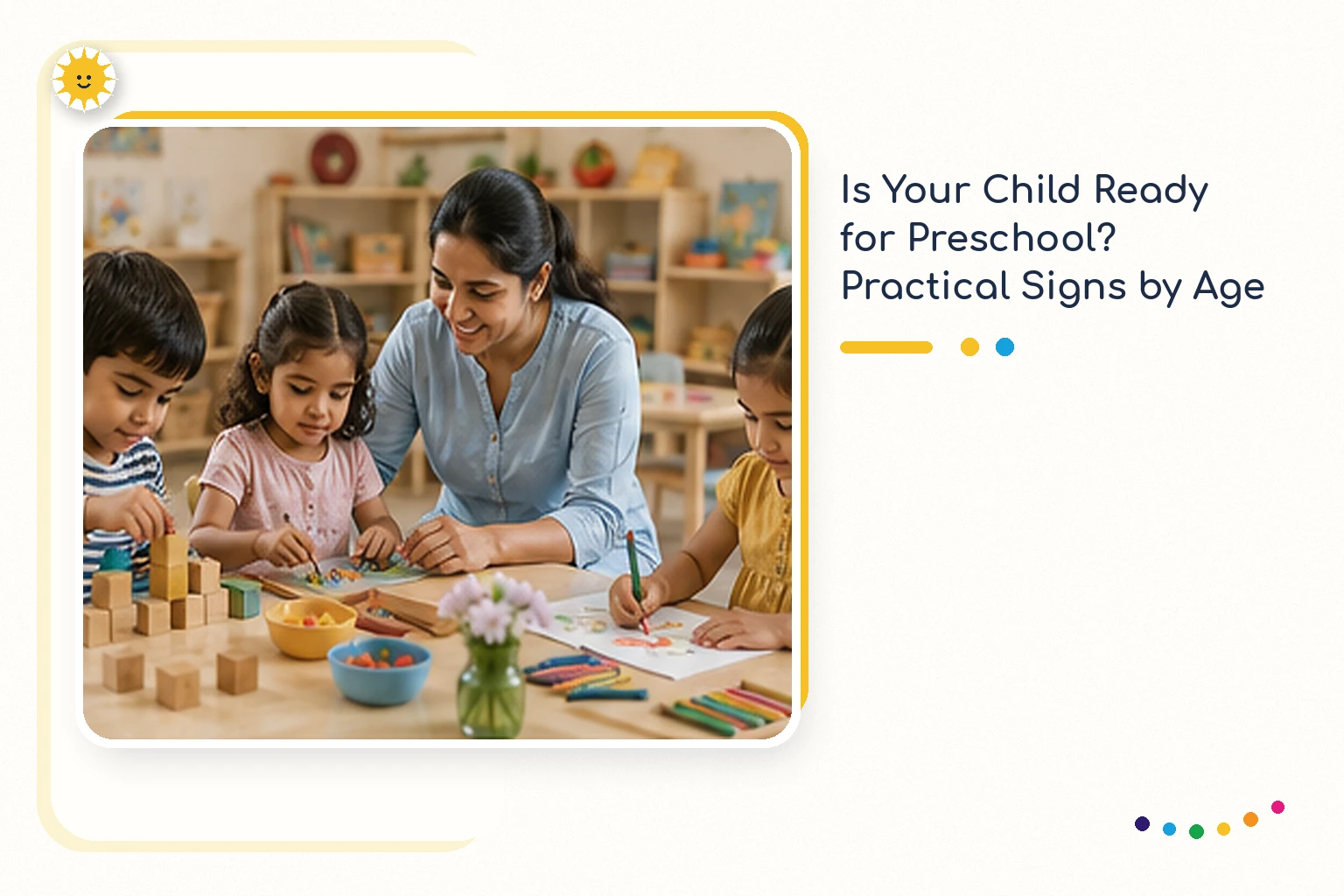
Preschool readiness is not a checklist of skills every child must master by the same birthday. Children develop at different rates, and a supportive preschool should help them grow rather than require them to arrive fully independent.
Instead of asking, “Can my child already do everything preschool expects?” ask:
- Can the environment respond to my child’s current needs?
- Can my child communicate basic needs in some way?
- Is my child beginning to take part in simple routines?
- Would regular time with other children and trusted adults be useful?
Readiness belongs partly to the child and partly to the school.
Readiness around ages two to three
At this stage, many children are still learning how to separate, communicate and participate near peers.
Possible signs include:
- Showing curiosity about other children
- Playing alongside others, even without sharing consistently
- Following one simple instruction sometimes
- Communicating hunger, discomfort or a need for help through words, sounds or gestures
- Sitting briefly for a story, song or snack
- Recognising a familiar routine
- Tolerating short periods with another trusted adult
- Moving around the environment with growing confidence
A child does not need perfect speech, toilet independence or the ability to sit for long periods.
Ask how the preschool supports children who observe before joining, need movement or communicate nonverbally.
Readiness around ages three to four
Children may begin to participate more actively in a group, though support is still normal.
Developing signs may include:
- Taking part in short group activities
- Expressing preferences
- Following a two-step direction some of the time
- Waiting briefly with adult help
- Using pretend play
- Attempting simple self-help tasks
- Recovering from small frustrations with support
- Showing interest in stories, songs, drawing, counting or conversation
These skills will not appear consistently every day. Tiredness, hunger, illness and unfamiliar situations affect what children can manage.
Readiness around ages four to five
As children approach kindergarten, readiness may include:
- Listening to and discussing a short story
- Speaking or otherwise communicating in a way familiar adults can understand
- Taking turns with reminders
- Following classroom routines
- Managing some belongings
- Attempting dressing, eating and toileting tasks
- Using pencils, crayons, blocks, clay or scissors suited to their age
- Recognising some letters, sounds, numbers or patterns
- Asking questions and trying different solutions
Academic knowledge is only one part. Curiosity, communication, movement, confidence and the ability to seek help are equally important foundations.
Separation is a skill, not a pass-or-fail test
A child can be ready for preschool and still cry during drop-off.
Useful early signs are:
- The child can accept comfort from another trusted adult
- Distress reduces with support
- The child becomes interested in something after the goodbye
- The child begins to understand that the parent returns
Separation becomes easier through predictable experiences. It does not need to be solved before the first day, and a gentle settling-in plan can carry most of that work.
Communication can take different forms
Children may use:
- Sentences
- Single words
- Home-language words
- Signs
- Gestures
- Facial expression
- Pointing
- Pictures or other supports
A preschool should learn how the child communicates and help build from there.
If you have concerns about speech, hearing, movement, behaviour or development, discuss them with an appropriate qualified professional. A blog article cannot assess an individual child.
Self-help skills that make the day easier
Helpful emerging skills include:
- Drinking from the cup or bottle used at school
- Eating some foods independently
- Washing and drying hands with help
- Removing simple clothing for toileting
- Carrying or identifying a bag
- Putting an item into a labelled place
- Asking for help
Children do not need complete independence. Look for a school that allows time, gives respectful assistance and avoids shaming accidents or mistakes.
Interest in play matters
Play is how young children investigate language, relationships, movement, cause and effect.
Notice whether your child enjoys:
- Pretend play
- Building
- Sorting
- Drawing
- Music
- Stories
- Outdoor movement
- Water or sensory play
- Helping with simple household routines
Interests can help educators create a bridge into the new environment.
Questions to ask a preschool
Ask:
- What do you expect children to do independently?
- How do you support children who are not toilet independent?
- How do you handle separation?
- How long are group activities?
- What happens when a child does not want to participate?
- How do you communicate developmental concerns?
- How are different home languages welcomed?
- Can the child visit before enrolment?
The answers should make room for individual development, not compare every child against one narrow pattern. Our preschool visit checklist sets out what else to look for on the day.
What parents can do today
Choose one routine to practise gently: carrying the bag, washing hands, opening the lunch box or using a goodbye phrase. Practise through play, without turning it into an admission test.