Settling in
First Week of Preschool: A Gentle Settling-In Plan
A realistic, low-pressure plan for helping your child begin preschool one day at a time.
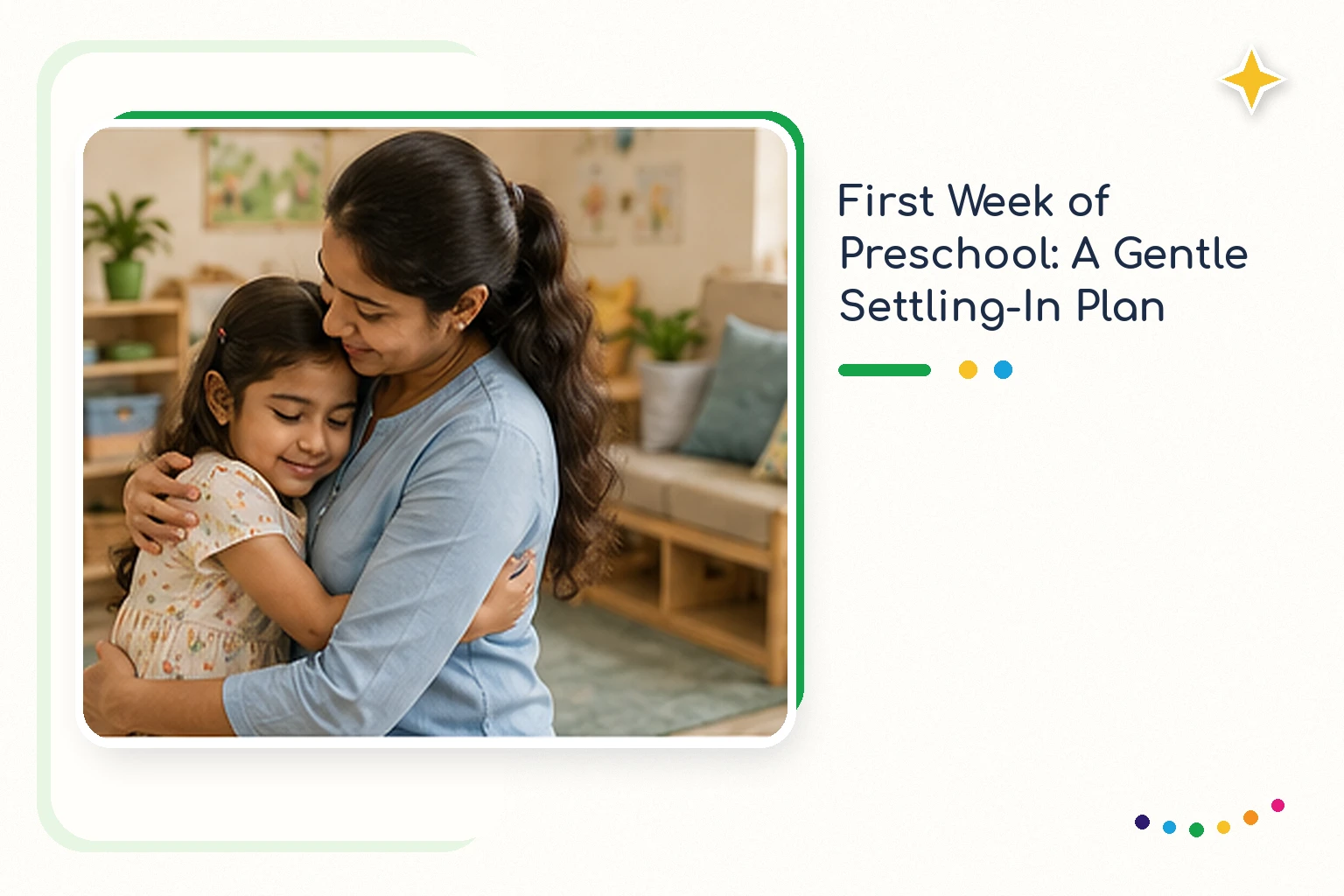
The first week of preschool is a transition for the whole family. A child may be excited at home and cry at the door. Another may enter happily for two days and become hesitant on the third. These reactions do not automatically mean that preschool is going badly.
Settling is rarely a straight line. The goal of the first week is not a tear-free performance. It is to help your child discover, through repetition, that the new place is safe, the adults will help, and you will return.
A few days before preschool
Prepare simply. Too much buildup can make the first day feel enormous.
Try:
- Mentioning the educator’s or school’s name in ordinary conversation
- Looking at one or two photographs of the entrance or room
- Practising carrying the child’s bag
- Reading a gentle story about starting school
- Explaining the basic sequence: arrive, play, eat, and come home
- Moving bedtime and morning routines gradually if needed
Avoid promising that the child will not cry or that every moment will be fun. A more helpful message is: “You may miss me. Your teacher will help you, and I will come back.”
Create a predictable goodbye
A short, repeatable goodbye reduces uncertainty.
Your routine might be:
- Put the bag in its place.
- Offer one hug.
- Say what will happen next.
- Name when you will return in a way the child understands.
- Leave calmly with the educator’s support.
For example: “You will play and have your snack. I will come back after lunch.”
Do not disappear without saying goodbye. It may stop the immediate protest, but it can make the child more watchful the next time.
Long negotiations can also increase distress. Agree on the handover plan with the educator before arriving.
Day one: make the experience understandable
On the first day:
- Arrive with enough time to avoid rushing
- Bring only the items requested by the school
- Tell the educator anything important about sleep, food, health or mood
- Use your planned goodbye
- Keep your phone available
- Ask what kind of update the school will provide
Your child may cry during handover and settle shortly afterwards. Ask the educator for a clear, honest update rather than repeated minute-by-minute messages.
Days two and three: expect changing reactions
Once children understand that preschool is recurring, they may protest more strongly. This can be difficult for parents, but it is not unusual.
Keep the morning sequence consistent:
- Wake
- Get ready
- Eat
- Travel
- Arrive
- Say goodbye
Avoid introducing new rewards or threats each day. The routine itself should become the reassuring part.
After pickup, offer connection before asking many questions. A tired child may not answer “What did you do today?” Try something smaller:
- “What toy did you notice?”
- “Did you sit near anyone at snack time?”
- “Show me how you washed your hands.”
- “Was anything difficult?”
Children may communicate through play, behaviour or silence rather than a full account.
Days four and five: look for small signs of trust
Settling does not only mean walking in without tears.
Progress may look like:
- Accepting comfort from an educator
- Becoming interested in one activity
- Eating or drinking at school
- Watching other children
- Joining for a short period
- Knowing where belongings go
- Recovering more quickly after goodbye
- Mentioning a person or activity at home
Share what you notice with the educator. Their observations and yours together give a fuller picture.
Keep home life a little lighter
Starting preschool requires energy. During the first week, some children are more tired, clingy, hungry or easily upset at home.
Where possible:
- Protect bedtime
- Keep evenings less scheduled
- Offer familiar food and quiet play
- Allow extra closeness
- Avoid turning every conversation into a preschool review
Regression in sleep, toileting or independence can sometimes appear during a transition. If a change is persistent, severe or worrying, speak with the school and an appropriate health professional rather than relying on general online advice.
Work as one team with the educator
Tell the educator:
- How your child usually seeks comfort
- Important words or gestures the child uses
- Food, sleep or toileting information
- Recent changes at home
- What the child enjoys
- What tends to overwhelm them
Ask:
- How long did distress last?
- What helped?
- Did the child connect with an adult or activity?
- Were they able to eat, drink, rest or use the toilet?
- Should tomorrow’s handover change?
The goal is a shared plan, not a daily score.
When to slow down and reassess
Some distress is expected, but parents should raise concerns when something feels wrong.
Speak with the school if:
- Distress remains intense throughout the session
- Your child is unable to eat, drink or rest over repeated days
- The child expresses fear of a specific person or event
- Communication from the school is vague or dismissive
- You notice unexplained injuries or major changes in behaviour
- The proposed settling plan does not consider the child’s age or needs
Trust is built through clear answers and responsive adjustments.
What parents can do today
Choose one goodbye sentence and one goodbye action. Share them with every adult involved in drop-off so your child receives the same calm message each day.