Learning and development
Celebrating Festivals at Preschool: Everyday Habits That Help Children Grow
A respectful guide to using festival moments as invitations for play, conversation and everyday habits that children can carry home.
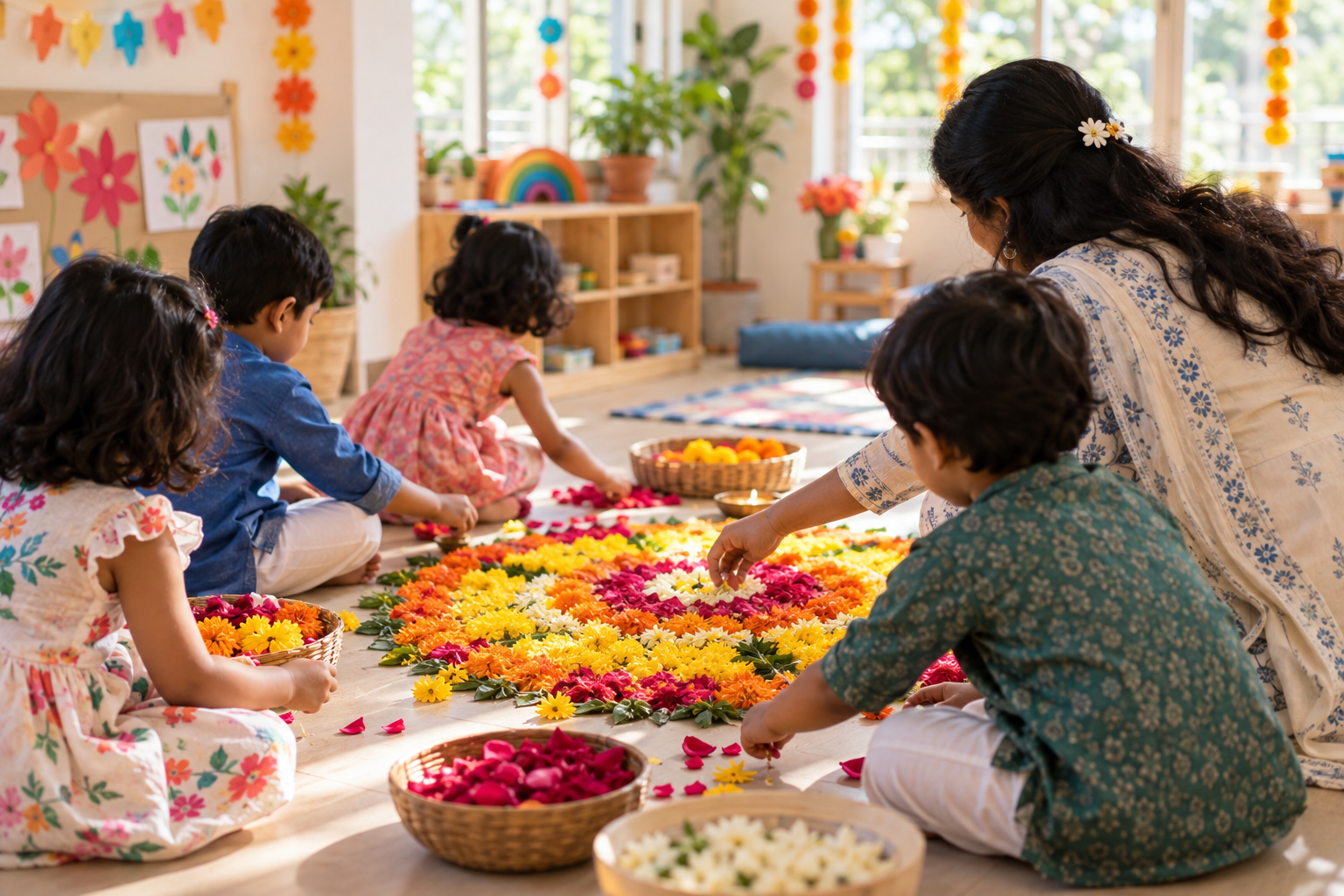
Festivals give young children a reason to notice colour, sound, texture, food, stories and the people around them. In a preschool, the most useful celebration is not a performance that children simply copy. It is an age-appropriate invitation to ask questions, make something, listen to another family’s experience and take part in a small shared responsibility.
Those moments can also connect to personal transformation in a grounded way: not a promise that one activity changes a child overnight, but a chance to practise one small habit repeatedly. Waiting for a turn, greeting someone, caring for materials, helping with cleanup and naming how we feel are everyday actions that gradually build confidence and belonging.
What can children learn through festival activities?
A thoughtful festival experience can bring several kinds of learning together:
- Language: children hear new words, tell what they notice and listen to stories from home and school.
- Sense and movement: they explore safe textures, colours, rhythm, fine-motor work and coordinated movement.
- Social learning: they share materials, wait, collaborate and see that people may mark special days in different ways.
- Creative thinking: they make choices rather than reproducing one perfect craft.
- Independence: they carry a small responsibility, such as placing petals, returning a brush or helping arrange a shelf.
The value is in the conversation and participation around the activity. A worksheet with a festival name on it is not the same as meaningful cultural learning.
How can a preschool celebrate respectfully?
Ask whether the school explains the context in simple language, welcomes family perspectives and keeps activities inclusive for children who may not observe the same festivals at home. A respectful approach avoids ranking one tradition, making a child perform belief, or reducing a complex celebration to costumes and decoration.
For younger children, educators can focus on sensory exploration, music, colours, stories, food conversations and kindness. For older preschoolers, they can add questions such as: What do you notice? What is similar or different? How can we care for this space? The child’s answer matters more than a polished display.
Which everyday habits can grow from celebration?
Choose one small action and repeat it beyond the festival:
- Notice: pause and name one colour, sound, shape, feeling or detail.
- Greet: practise welcoming a person and making space for their voice.
- Help: give the child one real job that is safe and achievable.
- Care: handle materials gently and return them when the activity ends.
- Wait: use a visible turn-taking routine instead of asking children to be patient without support.
- Reflect: ask what the child enjoyed, found difficult or would like to try again.
These habits are modest by design. Repeated in ordinary moments—snack time, arrival, play, cleanup and bedtime—they can help children practise self-regulation, empathy and independence.
How can parents carry the learning home?
Keep the follow-up open and short. Ask, “What did you notice?” rather than testing the child on the name or meaning of a festival. If your child brings home a craft, invite them to explain their choices. If they helped prepare something, let them do one small part of the cleanup too.
You can create a family habit that is not tied to one tradition: greet one another when someone arrives, choose one person to thank, notice one good detail from the day, or put away materials together. The goal is a predictable ritual of attention and care, not a perfect family performance.
What should parents ask a preschool about celebrations?
- Which festivals and cultural moments do you mark, and how do families contribute?
- How do you keep participation age-appropriate and optional where needed?
- Are food, fragrance, costume and sensory needs considered?
- What does the child actually do during the activity?
- How do you explain differences without stereotyping?
- How do you share photos or artwork while respecting family consent?
These questions help you see whether the celebration is connected to the school’s everyday way of working: warm relationships, hands-on play, clear boundaries and room for children to make meaning.
Frequently asked questions
Why celebrate festivals in preschool?
Festivals can give children meaningful contexts for language, sensory play, creativity, cooperation and learning about family and community. The activity should remain age-appropriate and respectful.
How do festivals build everyday habits?
They create a natural moment to practise a small action such as greeting, helping, waiting, caring for materials or reflecting. Repeating that action in ordinary routines is what makes it useful.
Should every child participate in every festival activity?
Participation should be inclusive and age-appropriate, with sensitivity to family beliefs, culture, food, sensory needs and a child’s comfort. Ask the school how it handles choice and alternatives.
What makes a festival activity meaningful instead of decorative?
Children have a chance to notice, ask, choose, make, help and talk. A display can be lovely, but it should be the record of children’s experience rather than the only goal.
References and further reading
- UNICEF Parenting. The science of play.
- NAEYC. Principles of child development and learning.
- CDC. Positive parenting tips for preschoolers.
What parents can do today
Choose one small family ritual for this week: greet one another, name one thing you noticed, help with one real task or thank someone who helped. Keep it brief, repeat it and ask what your child thinks.