Choosing care
Preschool vs Daycare: What Is the Difference for Your Child?
Preschool and daycare can overlap, but they solve different parts of a family’s day.
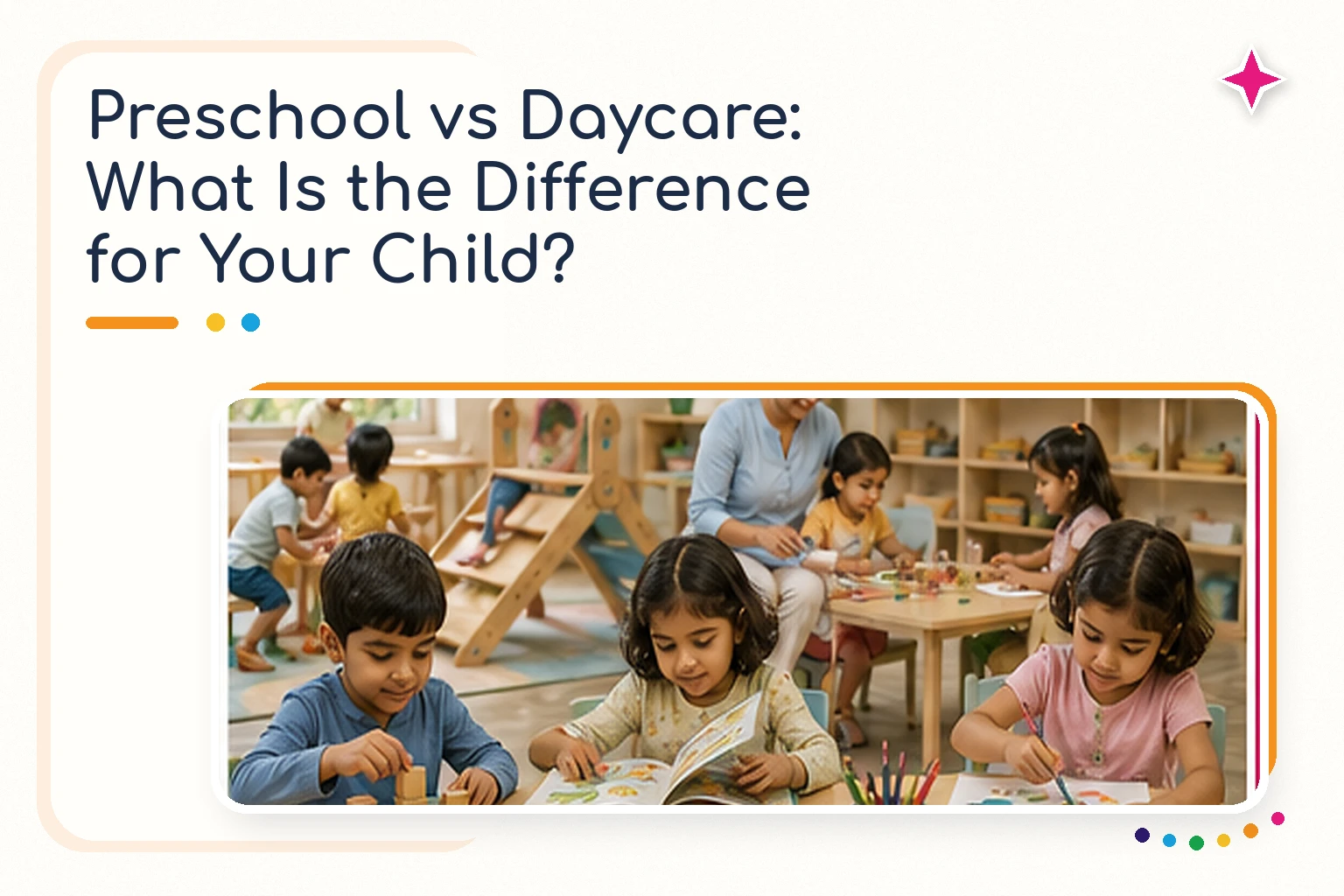
Parents often use “preschool” and “daycare” to describe the same place, especially when one centre offers both. The services can overlap, but they are not identical.
The simplest distinction is:
- Preschool focuses on planned early-learning experiences and preparation for group learning and school.
- Daycare focuses on safe, responsive care across a longer part of the day, including meals, rest, play and personal routines.
A good combined programme should not feel like schoolwork from morning until evening. It should change pace as the child’s energy and needs change.
What preschool usually includes
Preschool is generally organised around a group of children at a similar developmental stage. The session may include:
- Conversation and circle time
- Stories and early language
- Music and movement
- Art and sensory exploration
- Blocks, puzzles and pretend play
- Early number and literacy experiences
- Fine- and gross-motor activity
- Learning to participate in a group
The purpose is not only academic preparation. Children also practise waiting, asking for help, managing belongings, expressing needs, solving small conflicts and moving between activities.
What daycare usually includes
Daycare supports the child across a longer period while parents or caregivers work.
Depending on age, the day may include:
- Feeding or meals
- Diapering or toileting
- Naps or quiet rest
- Indoor and active play
- Comfort and individual attention
- Age-appropriate activities
- Homework or school-readiness support for older children
- A calmer late-afternoon routine
Quality daycare is not simply supervision. Responsive care, conversation, play and predictable routines all contribute to development.
How hours differ
A preschool session often covers part of the day. Daycare may begin earlier, continue later or wrap around preschool.
Ask each centre:
- Which hours are preschool?
- Which hours are daycare?
- Does the same team stay with the children?
- Where do children eat and rest?
- How does the environment change after the preschool session?
- What is offered late in the day?
- Can families choose part-day or full-day arrangements?
This is especially important when comparing centres that advertise the same closing time but structure the day differently. If you are comparing daycare around Manyata Tech Park, the late-afternoon routine is worth asking about in detail.
Tender Moments Hebbal offers preschool and extended daycare. The centre is open Monday to Friday from 8:30 AM to 8 PM and Saturday from 8:30 AM to 4 PM.
Which ages are served?
Daycare may begin in infancy, while preschool typically begins later when children are ready for a more consistent group routine. Exact age bands and programme names vary between centres.
Tender Moments Hebbal serves children from 6 months to 8 years through infant daycare, Playgroup, Nursery, Junior KG, Senior KG, activity classes and school-readiness support.
Age alone should not determine the arrangement. Consider:
- Communication
- Comfort with other adults
- Sleep and meal routines
- Mobility
- Need for movement
- Ability to participate briefly in a group
- Sensory and emotional needs
- The length of day suitable for the child
Does your child need one or both?
Preschool may fit when:
- The family needs a shorter learning session
- Care is available before and after
- The child benefits from a regular peer group
- School-readiness experiences are the main need
Daycare may fit when:
- The family needs care across the workday
- The child requires meals, naps or personal care during those hours
- A flexible part-day or full-day arrangement is needed
- The child is younger than typical preschool age
A combined programme may fit when:
- Parents need one location across the day
- The child can move from a structured morning into a calmer care routine
- The centre provides age-appropriate meals, rest, play and learning
- Communication remains clear across the whole day
What quality looks like in either setting
Whether the service is called preschool, daycare or both, look for:
- Warm interaction
- Safe arrival and pickup
- Clean, usable spaces
- Age-appropriate materials
- Time for active and quiet play
- Predictable routines
- Respectful toileting and feeding support
- Honest communication
- Opportunities to visit and ask questions
Labels are useful, but the lived routine matters more. A structured visit checklist makes those differences easier to see.
What parents can do today
Draw your child’s required day from arrival to pickup. Mark learning, meals, rest, care and travel. Then ask each centre to show how its real timetable fits that day.